Intelligence
at the Edge.
Transforming complex Computer Vision into high-performance, local execution. An Engineer, 20+ years in deep tech, and a focus on what matters: Data Sovereignty, Privacy, and Speed.

About
Engineering AI That Runs Where It Matters.
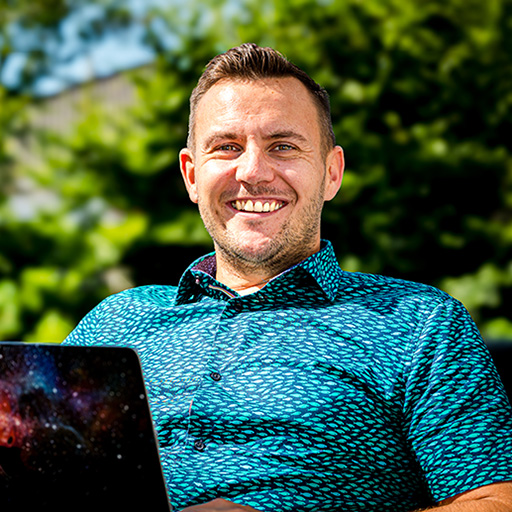
I'm Dr.-Ing. Tobias Scheck, an AI engineer with two decades of experience turning complex computer vision research into systems that run reliably on real hardware — from automotive sensor stacks to ambient assisted living devices.
My career spans research at Fraunhofer HHI, neural network optimization at Bosch, Active Assisted Living research at Chemnitz University, and automotive perception at Peregrine Technologies in Berlin. My PhD focused on improving object detection for omnidirectional cameras using simulated data — defended magna cum laude in 2024. What connects all of it: making AI work under real-world constraints — limited compute, strict latency budgets, and data that never looks like the training set.
I believe the next wave of AI isn't in bigger cloud models. It's in sovereign, private, and fast inference on edge devices — where your data never leaves your infrastructure. That's where I help companies ship: designing custom architectures, bridging the sim-to-real gap with synthetic data, and deploying pipelines that are GDPR-compliant by design.
If you need AI that works without a cloud roundtrip, let's talk.
Core Expertise
Built Custom, Not Off-the-Shelf
No generic cloud APIs. No drag-and-drop platforms. Every network and pipeline is individually designed for your hardware, your data, and your constraints.

Custom Vision Architectures
No off-the-shelf APIs or cloud platforms. I design purpose-built neural networks tailored to your specific sensor, hardware, and latency constraints — from omnidirectional cameras to automotive perception stacks.

Edge-Native Model Design
Every architecture is designed with the target hardware in mind from day one. Custom network topologies, hardware-aware training, pruning, quantization, and distillation — not a generic model squeezed onto a device.

Synthetic Data & Domain Adaptation
Real-world training data is scarce, expensive, and privacy-sensitive. I build custom data generation pipelines and close the sim-to-real gap so your model performs where it matters — in the field.
Why Edge AI?
Your data should never leave your premises.
Cloud AI means sending sensitive data to third-party servers — a privacy risk and a compliance liability. Edge AI keeps inference local: full data sovereignty, GDPR by design, and zero dependency on external infrastructure.

Data Sovereignty
Cloud
Data sent to third-party servers
Edge
Data never leaves your infrastructure
When you send data to a cloud API, you lose control over where it's stored, who can access it, and how long it's retained. Edge inference keeps every frame, every prediction, and every byte on hardware you own.
Privacy & Compliance
Cloud
GDPR risk, data residency issues
Edge
GDPR by design, no external transfers
EU regulations like GDPR require strict control over personal data. Edge AI eliminates cross-border data transfers entirely — no DPAs with cloud providers, no residency headaches, no breach surface.
Latency
Cloud
100–500ms round-trip
Edge
<10ms on-device
A cloud round-trip adds network latency that makes real-time decisions impossible. On-device inference responds in single-digit milliseconds — critical for automotive safety, robotics, and interactive systems.
Cost & Reliability
Cloud
Recurring API & GPU costs
Edge
One-time hardware investment
Cloud inference bills scale with usage and fail when the network drops. Edge hardware is a one-time investment that runs independently — no surprise invoices, no downtime from connectivity issues.
Services
From Research to Reality
Focused engagements that move the needle. No vague strategy decks — tangible results on real hardware.
AI Strategy & Assessment
Identifying where Edge AI can ensure data sovereignty, cut costs, and enable new products without cloud dependencies. From feasibility study to privacy-first architecture blueprint.
Edge Deployment & Optimization
Porting Python/PyTorch models to C++/TensorRT/OpenVINO for production hardware. Hitting your FPS and memory targets on real silicon.
Performance Audit
Why is your model slow? Where is the bottleneck? A deep-dive into your inference pipeline with actionable fixes.
Professional Path
Built in Industry, Forged in Research.
From Fraunhofer research labs to automotive perception at Peregrine, with a PhD that bridges synthetic data and real-world deployment.

Lecturer — HTW Berlin & TU Chemnitz
Teaching Digital Image Processing & Computer Vision (HTW Berlin) and Programming & Data Analysis (TU Chemnitz). Covering the full pipeline from sensor physics to deep learning architectures.
Senior Machine Learning Engineer — Peregrine Technologies GmbH, Berlin
Research, implementation, and optimization of image-based deep learning methods in an automotive context with Python & C++. Developing robust object detection algorithms for low-power systems deployed on cloud and edge systems including AWS and mobile phones. Defended doctoral thesis (magna cum laude) at Chemnitz University of Technology in June 2024.
Research Associate — Chemnitz University of Technology
AUXILIA project: Active Assisted Living using neural networks to process omnidirectional image data. Developed a 3D simulation using a game engine to generate synthetic training data. Built sleep quality detection from camera data. Published research at international conferences and supervised students.
Master Thesis — Robert Bosch GmbH, Hildesheim
Explored methods to optimize neural networks for semantic segmentation — floating point operations, memory usage. Implemented a genetic programming approach using cartesian genetic programming to find and evaluate neural network architectures automatically.
Research Assistant — Fraunhofer Heinrich Hertz Institut, Berlin
Tile-based HEVC video for Virtual Reality — implementing algorithms for encoding and transmitting high-quality 360° video for VR. Built adaptive HTTP streaming on mobile devices. Presented at CES Las Vegas and IBC Amsterdam.
Dr.-Ing. (PhD) — Chemnitz University of Technology
"Improving Deep Learning-based Object Detection Algorithms for Omnidirectional Images by Simulated Data." Defended magna cum laude. Research on bridging the domain gap between synthetic and real-world data for 360° camera systems.
M.Sc. International Media & Computing — University of Applied Science, Berlin
Focus on optimization and compression of neural networks.
Freelancer & Developer — scheck-media
Developed PHOTILS — a neural network application that classifies images and extracts suggested tags for social media. Built plugins for Darktable photo software. Earlier career includes web and mobile development, IT administration, and an internship in Malta.
Teaching
Lecturer & Educator
Sharing knowledge at German universities — from signal theory fundamentals to state-of-the-art deep learning.
Digital Image Processing & Computer Vision
HTW Berlin — Informatik in Kultur und Gesundheit
A comprehensive course covering the full pipeline from sensor to scene understanding — from the physics of image formation through classical computer vision to modern deep learning architectures for detection and segmentation.
Programming and Data Analysis with Python
Chemnitz University of Technology
A comprehensive introduction to programming using the Python ecosystem, specifically tailored for data analysis and scientific computing.
Start a Conversation
Let's Build Something Fast.
Have a vision pipeline that needs to run 10x faster? A model that won't fit on your target hardware? Let's talk.
Dr.-Ing. Tobias Scheck
Typical Engagement
Most projects start with a 2-week assessment phase to understand your pipeline, hardware, and constraints. From there, we define measurable targets and iterate.